Bluetooth Speaker Acoustic Design Explained: How Sound Quality Is Engineered in 2026
Bluetooth Speaker Acoustic Design Explained: How Sound Quality Is Engineered
Introduction
When people evaluate a Bluetooth speaker, they usually focus on sound quality. But what most buyers do not see is that sound quality is not accidental—it is engineered through acoustic design, component selection, and system tuning.
For OEM and ODM speaker manufacturing, acoustic engineering is one of the most important factors that determines product performance and market success. This article explains how Bluetooth speaker sound is designed and optimized in modern manufacturing.
What Is Acoustic Design in Bluetooth Speakers?
Acoustic design refers to how a speaker is engineered to produce sound.
It involves the interaction between:
Speaker drivers
Enclosure structure
Airflow design
DSP tuning
Material selection
The goal is to create balanced, clear, and powerful audio output.
1. Speaker Drivers: The Core of Sound Production
The driver is the most important component in a Bluetooth speaker.
It converts electrical signals into sound waves.
Key factors include:
Driver size (e.g., 40mm, 52mm, 66mm, 93mm)
Magnetic strength
Diaphragm material
Power handling capacity
Larger drivers typically produce stronger bass, while smaller drivers are optimized for clarity and portability.
2. Enclosure Design: Controlling Sound Behavior
The speaker housing is not just a shell—it plays a major role in sound performance.
Different enclosure designs affect:
Bass depth
Sound clarity
Resonance control
Volume efficiency
Common structures include:
Sealed enclosure
Bass reflex design
Passive radiator system
Each structure creates a different sound signature.
3. DSP (Digital Signal Processing)
DSP tuning is used to optimize sound output electronically.
It helps control:
Bass enhancement
Volume balance
Frequency correction
Distortion reduction
In gaming speakers and modern Bluetooth speakers, DSP is essential for achieving a balanced sound profile.
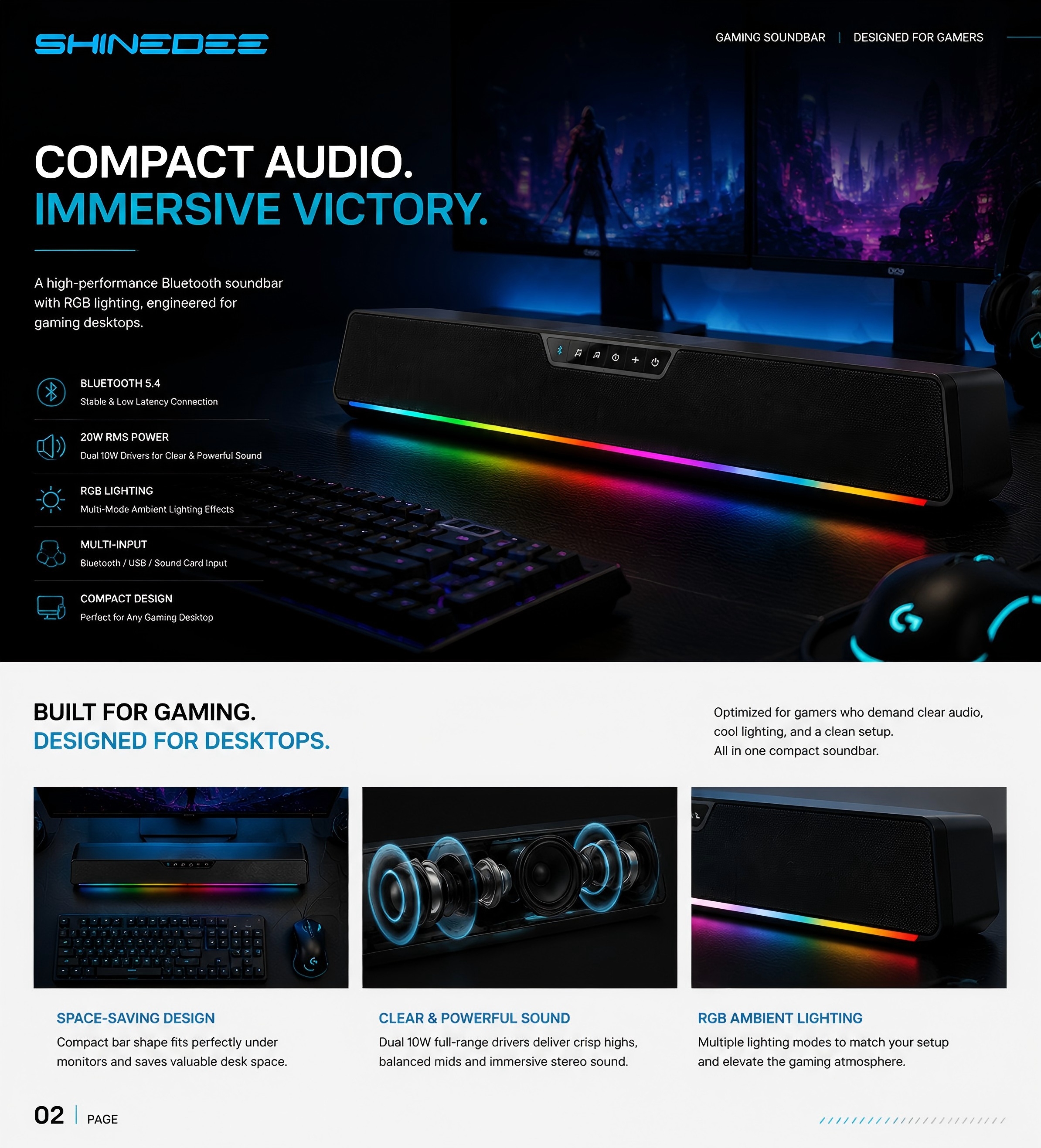
4. Passive Radiator Technology
Many portable and RGB gaming speakers use passive radiators to enhance bass.
A passive radiator is not powered directly. Instead, it vibrates based on air pressure inside the enclosure.
Benefits include:
Stronger bass in compact designs
Improved low-frequency response
No additional power consumption
This is widely used in modern compact speakers.
5. Airflow and Acoustic Balance
Internal airflow design is critical for sound stability.
Poor airflow can cause:
Distortion
Weak bass
Uneven sound output
Engineers carefully design internal chambers to optimize air movement and pressure balance.
6. Material Selection and Vibration Control
Materials used in speaker construction affect sound quality.
Common materials include:
ABS plastic (standard)
PC+ABS (enhanced rigidity)
Metal mesh (sound transparency)
Silicone components (vibration absorption)
Proper material selection helps reduce unwanted resonance and vibration noise.
7. Tuning for Different Product Categories
Different speaker types require different sound tuning strategies:
Gaming Speakers
Emphasize bass impact
Strong directional audio
High volume output
Portable Speakers
Balanced sound
Battery efficiency
Compact acoustic chamber
Outdoor Speakers
High loudness
Strong bass in open environments
Durable sound performance
Soundbars
Wide stereo field
Clear vocal separation
TV and gaming optimization
Why Acoustic Design Matters for OEM & ODM Projects
For brands, acoustic design directly impacts:
Product positioning
Customer satisfaction
Return rates
Brand reputation
Market competitiveness
A well-designed speaker can outperform competitors even at similar cost levels.
How Manufacturers Develop Sound Quality
Professional factories usually follow a structured process:
Acoustic simulation
Prototype testing
DSP tuning adjustments
Real-world listening tests
Iterative optimization
This process may take several development cycles before final mass production.
🏭 Real Factory Insight
In real manufacturing, acoustic tuning is rarely finalized in the first sample.
For example, bass performance often needs multiple adjustments between:
driver selection
enclosure volume
passive radiator tuning
DSP firmware updates
Even small changes in internal structure can significantly affect sound quality. That is why experienced OEM factories always go through multiple tuning rounds before approving final mass production samples.
How Buyers Should Evaluate Acoustic Capability
When selecting a Bluetooth speaker manufacturer, ask:
Do you have acoustic engineers?
Can you provide frequency response data?
How many tuning iterations are included?
Do you test with real listening evaluations?
Can you customize sound profiles for different markets?
These questions help evaluate real engineering capability—not just marketing claims.
Why Choose Shinedee
Shenzhen Shinedee Electronics Co., Ltd. has over 16 years of experience in Bluetooth speaker development.
Our acoustic engineering capabilities include:
Driver selection optimization
Enclosure structural design
DSP tuning development
Passive radiator integration
Sound profile customization
We develop products across multiple categories:
RGB Gaming Speakers
Portable Bluetooth Speakers
Outdoor Waterproof Speakers
Gaming Soundbars
Computer Speakers
Each product is tuned to meet different market requirements across North America, Europe, and Asia.
🔎Read more: How Bluetooth Speaker Testing Ensures Product Quality Before Shipment From SHINEDEE
Frequently Asked Questions
What affects Bluetooth speaker sound quality the most?
The combination of drivers, enclosure design, and DSP tuning has the greatest impact.
Can sound be customized for different markets?
Yes. Many OEM manufacturers offer sound tuning based on regional preferences.
Why do small speakers still have strong bass?
Because of passive radiator systems and DSP enhancement.
Is acoustic design important for portable speakers?
Yes. It determines how much sound quality can be achieved in a compact structure.
How many times is sound typically tuned before production?
Usually several iterations are required before final approval.
Conclusion
Bluetooth speaker sound quality is not a single component—it is the result of carefully engineered acoustic design. Understanding how drivers, enclosure structures, DSP tuning, and material selection work together helps buyers make better OEM and ODM decisions.
For brands looking to develop competitive audio products, working with an experienced manufacturer with strong acoustic engineering capability is essential.
Shinedee continues to refine acoustic design across all product categories to help global brands deliver better sound experiences.