OEM Bluetooth Wireless Portable Speaker Manufacturer | Cut 12% Inventory Loss
How an OEM Bluetooth Wireless Portable Speaker Manufacturer Stops 12% Monthly Inventory Profit Loss
If you run a bluetooth speaker distribution business, you may not notice the quiet profit drain happening in your warehouse every month. Industry data shows distributors lose an average of 12% of their purchasing cost monthly to slow-moving stock and model obsolescence — and that’s before counting tied-up capital and storage fees.
Working with an experienced OEM bluetooth wireless portable speaker manufacturer can help you avoid these hidden costs. This guide breaks down the inventory risks across major speaker categories, calculates the real financial impact, and shares actionable strategies to protect your margins.
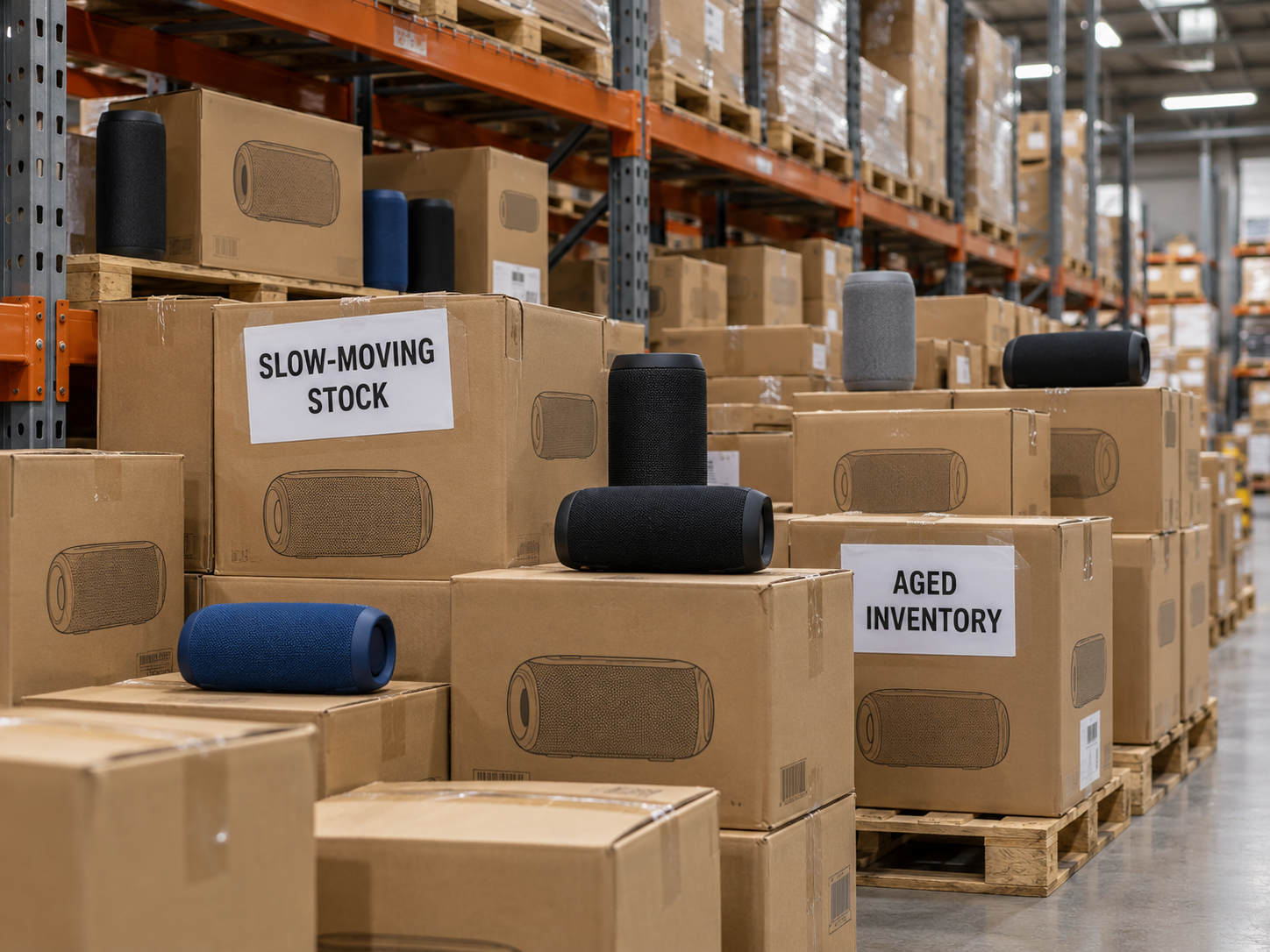
The Hidden 12% Monthly Profit Drain From Bluetooth Speaker Inventory
Most distributors focus on sales volume, but few track the full cost of unsold stock. The 12% loss figure comes from combined factors that eat into margins before you even realize it.
What Makes Up the 12% Inventory Loss
The 12% average loss breaks down into three core components. First, model depreciation accounts for 5-7% as new bluetooth versions and features hit the market, making older models less desirable. Second, storage and handling costs add 3-4% monthly for warehouse space, insurance, and inventory management labor. Third, capital opportunity cost represents 2-3% of lost revenue from money tied up in stock that could be invested in fast-selling products.
For example, if you purchase $50,000 worth of speakers monthly, 12% loss equals $6,000 in wasted profit every 30 days. Over a year, that’s $72,000 in avoidable expenses — enough to expand your product line or hire two additional sales staff.
Why Traditional Inventory Planning Fails
Many distributors use outdated forecasting methods that don’t account for the fast pace of consumer tech evolution. They order large quantities to get lower unit costs, but end up stuck with stock that loses value faster than it sells.
Another common mistake is treating all speaker categories the same. A portable mini speaker has a much shorter product lifecycle than a high-end soundbar, so they require completely different inventory strategies. Without category-specific planning, you’ll almost always end up with dead stock in faster-moving segments.
A reliableOEM bluetooth wireless portable speaker manufacturercan help you avoid these pitfalls with flexible production options tailored to your actual sales velocity.
Inventory Turnover Pitfalls Across 4 Bluetooth Speaker Categories
Not all speaker inventory carries the same risk. Each category has unique sales cycles, update frequencies, and obsolescence rates that directly impact your turnover rate and profit margins.
Portable & Outdoor Bluetooth Speakers: Fastest Obsolescence Risk
Portable and outdoor speakers are the most popular category, but they also have the highest inventory risk. New models launch every 3-6 months with improved battery life, waterproof ratings, and smart features. If you hold stock for more than 90 days, you’ll likely need to discount 20-30% to clear old inventory.
Outdoor bluetooth speaker inventory is especially volatile because demand is highly seasonal. Most sales happen in spring and summer, so stock ordered in Q4 may sit until the following year, losing 15-20% of its value before peak season even arrives.
Distributors often overorder portable speakers because they have low minimum order quantities. But the low upfront cost hides the high long-term risk of obsolescence.
Soundbars & Gaming Speakers: Higher Value, Higher Holding Cost
Soundbars and gaming speakers have longer lifecycles (12-18 months) but much higher unit costs, so each unsold unit ties up significantly more capital. A single high-end soundbar might cost $80-120 wholesale, compared to $10-20 for a basic portable speaker.
Soundbar speaker stock management is challenging because technology changes more slowly but more dramatically. When new connectivity standards (like HDMI 2.1 or Dolby Atmos) become standard, older models become almost unsellable overnight, requiring 50%+ discounts to move.
Gaming speaker inventory risk is tied to gaming console release cycles and popular game launches. If you time your orders wrong, you could be stuck with stock that doesn’t match current gamer preferences.
The Real Math: 1000 Slow-Moving Units = 2 Months of Lost Profit
Let’s do the calculation to show the real impact. Suppose you have 1000 units of a slow-moving portable speaker that cost you $15 each. Your total investment is $15,000.
With 12% monthly loss, that’s $1,800 in lost value every month. If your average net profit margin on speaker sales is 10%, you need $18,000 in sales just to cover that $1,800 loss. For most small to mid-sized distributors, that’s roughly 2 months of net profit wiped out by just one slow-moving SKU.
And that’s the conservative estimate. If the model becomes completely obsolete, you might only recover 30-40% of your cost through clearance sales, turning a $15,000 investment into a $9,000-10,500 loss.
How to Fix Inventory Turnover With Strategic Supplier Partnerships
The good news is that inventory loss isn’t inevitable. With the right approach and the right manufacturing partner, you can reduce slow-moving stock by 60-80% while maintaining healthy sales growth.
SKU Rationalization: Focus on What Actually Sells
The first step is to audit your current product lineup and cut underperforming SKUs. Most distributors carry 30-50% more models than they need, which spreads inventory too thin and increases the chance of dead stock.
Start by analyzing 6 months of sales data for each SKU. Calculate your inventory turnover rate (cost of goods sold divided by average inventory value) for each category. Any SKU with a turnover rate below 4x per year is a candidate for elimination.
A goodOEM bluetooth wireless portable speaker manufacturerwill help you identify your top-performing models and create custom variants that stand out from competitors, rather than offering dozens of generic options that don’t sell.
Small-Batch Production: Match Supply to Actual Demand
The most effective way to reduce inventory risk is to order smaller quantities more frequently. Many distributors assume large orders are always cheaper, but they don’t factor in the 12% monthly inventory loss.
For example, ordering 500 units at $16 each (total $8,000) and selling them in 30 days costs you $8,000 plus $0 in inventory loss. Ordering 2000 units at $14 each (total $28,000) and selling them over 4 months costs you $28,000 plus $3,360 in 12% monthly losses — for a total of $31,360, which is actually more expensive per unit.
Look for a wholesale bluetooth speaker supplier that offers low minimum order quantities (MOQs) of 50-100 units for custom models, so you can test new products without risking large amounts of capital.
Data-Driven Forecasting With Supplier Collaboration
The best inventory strategies involve close collaboration with your manufacturer. Share your sales data and market trends with your OEM partner so they can help you plan production schedules that match actual demand.
Many experienced manufacturers have access to broader industry data and can alert you to upcoming trends or technology changes before they hit the mainstream. This gives you time to adjust your inventory and avoid getting stuck with soon-to-be-obsolete models.
Supply chain flexibility is the key advantage here. A partner that can adjust production volumes up or down by 20-30% within 2-4 weeks gives you the agility to respond to market changes without excess inventory.
Choosing the Right OEM Partner to Protect Your Profit Margins
Not all manufacturers are created equal when it comes to helping you manage inventory risk. Here’s what to look for when evaluating potential OEM partners.
Key Capabilities That Reduce Inventory Risk
First, look for flexible MOQ options. A manufacturer that requires 500+ unit minimums for custom orders will force you to carry more inventory than you need. The best partners offer MOQs as low as 50 units for standard models and 100-200 units for fully custom designs.
Second, check their product update cycle. A manufacturer that releases 2-3 new models per quarter (rather than 10+) shows they focus on quality and market fit, not just flooding the market with options that will quickly become obsolete.
Third, look for inventory support services like drop-shipping, consignment stock, or just-in-time delivery. These services let you keep less stock on hand while still meeting customer delivery times.
Questions to Ask Potential Manufacturing Partners
Before signing with anOEM bluetooth wireless portable speaker manufacturer, ask these critical questions:
What’s your minimum order quantity for custom-branded models?
How quickly can you adjust production volumes if demand changes?
What’s your typical product lifecycle for portable speaker models?
Do you offer drop-shipping or third-party logistics integration?
Can you provide sales data or market insights for different speaker categories?
What’s your policy for remaining stock if a model is discontinued?
The answers to these questions will tell you whether the manufacturer is truly invested in your long-term success, or just interested in selling you as much inventory as possible.
Building a Long-Term Partnership for Sustainable Growth
The most profitable distributor-manufacturer relationships are long-term partnerships, not transactional purchases. When you work with the same OEM for 1-2+ years, they learn your business needs, can anticipate your inventory requirements, and will prioritize your orders during peak seasons.
Long-term partners are also more likely to work with you on custom product development, creating exclusive models that only you sell. Exclusive products have higher margins and less price competition, which further reduces inventory risk because customers can’t comparison shop for the exact same item.
Why choose Shinedee:
With over 16 years of experience, Shinedee is a trusted gaming and portable speaker manufacturer serving global brands and distributors.
● One-stop OEM/ODM solutions
● Strong R&D and product development
● Stable production and fast delivery
● Strict quality control system
● Global certification support (CE, FCC, RoHS)
● Reliable logistics and after-sales service

In conclusion, the 12% monthly inventory loss that plagues most bluetooth speaker distributors is not a necessary cost of doing business. By understanding the specific risks across product categories, calculating the real financial impact of slow-moving stock, and partnering with a flexible, experiencedOEM bluetooth wireless portable speaker manufacturer, you can dramatically reduce inventory costs and protect your profit margins. Start by auditing your current inventory today to identify your biggest risk areas, then look for a manufacturing partner that offers the flexibility and support you need to grow profitably.