OEM Bluetooth Speaker Development Timeline: From Idea to Mass Production
OEM Bluetooth Speaker Development Timeline: From Idea to Mass Production
Introduction
For brands developing a new Bluetooth speaker product, one of the first questions is:
How long does it take from concept to mass production?
The answer depends on product complexity, customization level, testing requirements, and manufacturing preparation.
A professional OEM speaker manufacturer should provide a clear development timeline to help brands plan:
Product launches
Marketing campaigns
Inventory preparation
Retail schedules
This guide explains the typical OEM Bluetooth speaker development process and timeline.
Overview of OEM Speaker Development Timeline
A typical OEM Bluetooth speaker project includes:
Product concept
Industrial design
Engineering development
Prototype creation
Testing and optimization
Tooling development
Certification
Pilot production
Mass production
The total timeline depends on whether the project is:
ODM customization
Semi-custom OEM
Fully customized OEM
Stage 1: Product Concept & Requirement Discussion
Estimated Time:
1–2 weeks
The project begins with understanding:
Target market
Product positioning
Required features
Price target
Expected quantity
Information needed:
Speaker type
Output power
Battery requirements
Bluetooth version
RGB requirements
Waterproof level
A clear product brief helps avoid delays later.
Stage 2: Industrial Design & Product Planning
Estimated Time:
2–4 weeks
This stage includes:
Product appearance design
3D modeling
Color selection
Material planning
Design decisions include:
Product size
Button layout
Port placement
Brand style
For gaming speakers, RGB design and visual effects are especially important.
Stage 3: Engineering Development
Estimated Time:
3–6 weeks
Engineers transform the design into a manufacturable product.
Work includes:
Structural design
PCB development
Component selection
Acoustic planning
Assembly optimization
Engineering decisions directly affect:
Cost
Performance
Reliability
Stage 4: Prototype Development
Estimated Time:
2–4 weeks
Prototype samples are created for evaluation.
Testing includes:
Appearance review
Functional testing
Sound evaluation
Bluetooth testing
Common prototype stages:
EVT (Engineering Validation Test)
Checks basic functionality.
DVT (Design Validation Test)
Confirms design performance.
PVT (Production Validation Test)
Prepares for mass production.
Stage 5: Acoustic Tuning & Optimization
Estimated Time:
1–3 weeks
Sound performance is refined through:
Driver adjustment
DSP tuning
Bass optimization
Frequency balance testing
Multiple rounds may be required to achieve the desired sound profile.
Stage 6: Tooling & Mold Development
Estimated Time:
4–8 weeks
For fully customized OEM products, tooling may be required.
Process includes:
Mold design
CNC processing
Trial samples
Mold adjustment
A high-quality mold ensures stable mass production.
Stage 7: Certification Testing
Estimated Time:
2–6 weeks
Depending on target market:
USA:
FCC
Europe:
CE
RoHS
UK:
UKCA
South Korea:
KC
Certification planning should begin early to avoid delays.
Stage 8: Pilot Production
Estimated Time:
1–2 weeks
Before full production, manufacturers conduct trial production.
Goals:
Confirm assembly process
Verify quality standards
Improve production efficiency
Stage 9: Mass Production
Estimated Time:
30–45 days
Mass production includes:
Component preparation
Assembly
Testing
Packaging
Final inspection
Production time depends on:
Order quantity
Product complexity
Factory capacity
OEM vs ODM Development Timeline
ODM Project
Typical timeline:
30–60 days
Advantages:
Existing design
Faster customization
Lower development risk
OEM Project
Typical timeline:
3–6 months
Advantages:
Unique product
Strong differentiation
Custom brand experience
🏭 Real Factory Insight
In real projects, the fastest development is not always the best development.
Many brands try to reduce the timeline by skipping:
Prototype testing
Acoustic tuning
Reliability validation
However, these steps prevent expensive problems after mass production.
A few additional weeks during development can save months of after-sales issues.
How Brands Can Shorten Development Time
1. Prepare Clear Requirements
Provide:
Target specifications
Market positioning
Design references
2. Choose an Experienced Manufacturer
Experienced factories already understand:
Component selection
Production challenges
Certification requirements
3. Use ODM Platforms When Appropriate
ODM reduces development time by using proven designs.
4. Make Decisions Quickly
Slow approvals are one of the biggest causes of delays.
Why Choose Shinedee
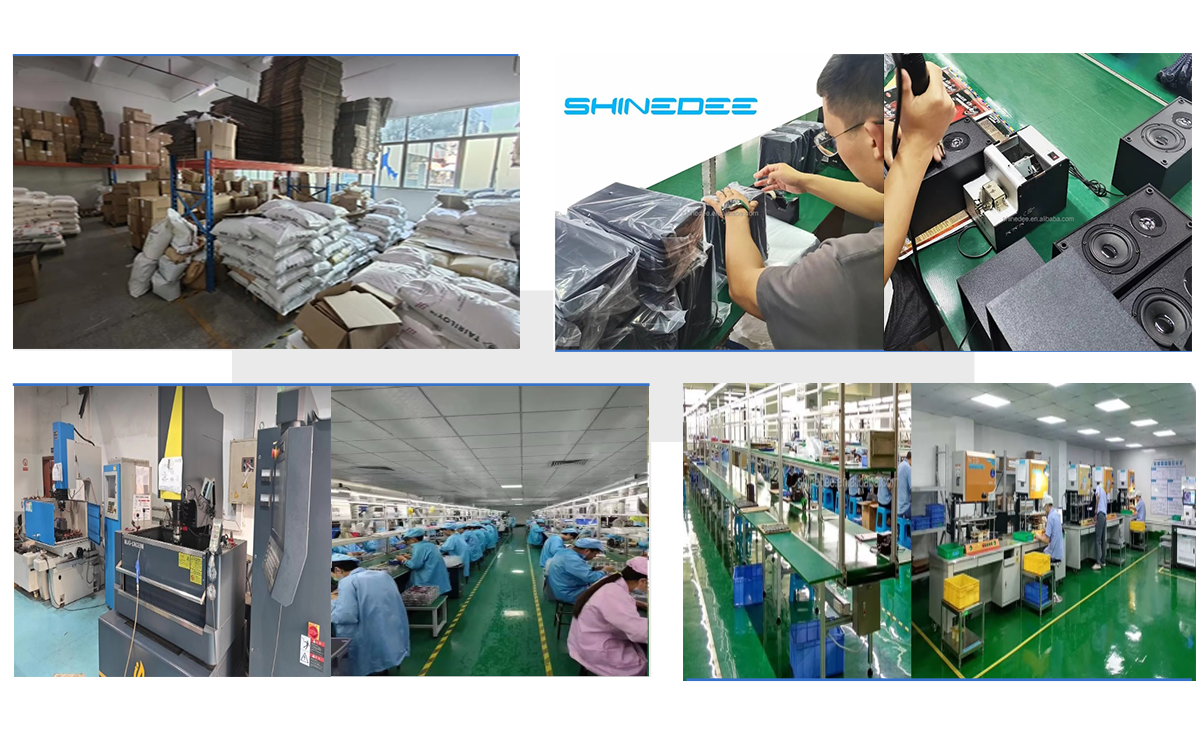
Shenzhen Shinedee Electronics provides complete OEM and ODM speaker development support.
Our development process includes:
Product planning
Industrial design
Engineering development
Prototype testing
Acoustic tuning
Tooling
Mass production
Product categories:
RGB Gaming Speakers
Portable Bluetooth Speakers
Outdoor Waterproof Speakers
Gaming Soundbars
Computer Speakers
With over 15 years of manufacturing experience, we help global brands move from concept to production efficiently.
Frequently Asked Questions
How long does OEM speaker development take?
Usually 3–6 months depending on customization complexity.
Is ODM faster than OEM?
Yes. ODM projects usually require less development time.
Can I develop a custom RGB gaming speaker?
Yes. RGB effects, design, and sound tuning can be customized.
What causes development delays?
Common causes include unclear requirements, slow approvals, and late design changes.
Should brands develop prototypes before production?
Yes. Prototype validation reduces production risks.
Conclusion
A successful OEM Bluetooth speaker project requires careful planning, engineering expertise, and structured project management.
Understanding the development timeline helps brands prepare better launch strategies and avoid unexpected delays.
By partnering with an experienced OEM and ODM manufacturer, brands can turn ideas into reliable, market-ready audio products.
Shinedee supports customers throughout the entire journey—from concept development to mass production.