Gaming Speaker Acoustic Design: How Manufacturers Create Better Sound Quality
Gaming Speaker Acoustic Design: How Manufacturers Create Better Sound Quality
Introduction
When consumers choose gaming speakers, RGB lighting and appearance may attract their attention first.
However, long-term satisfaction depends on something more important:
Sound quality.
A professional gaming speaker is not simply a regular speaker with RGB lights added.
Behind every high-quality gaming audio product is a complete acoustic development process involving:
Driver selection
Acoustic structure design
DSP tuning
Sound testing
User experience optimization
For gaming brands, importers, and OEM buyers, understanding acoustic design helps them evaluate whether a manufacturer can truly develop competitive audio products.
Why Acoustic Design Matters for Gaming Speakers
Gaming creates unique audio requirements.
Unlike casual music listening, gamers often need:
Clear directional sounds
Strong impact effects
Balanced dialogue
Immersive atmosphere
Low distortion at high volume
Examples:
FPS Games
Players need:
Footstep clarity
Environmental awareness
Accurate sound positioning
Racing Games
Players expect:
Engine impact
Powerful bass
Dynamic sound effects
RPG Games
Players want:
Immersive atmosphere
Detailed background sounds
Cinematic experience
A good acoustic design improves every gaming scenario.
Component 1: Speaker Driver Selection
The speaker driver is the foundation of sound production.
Manufacturers consider:
Driver size
Magnet strength
Diaphragm material
Power handling
Frequency response
Different gaming speakers require different driver solutions.
Small Desktop Speakers
Prioritize:
Clear vocals
Compact structure
Balanced sound
Gaming Soundbars
Prioritize:
Wide sound field
Stereo separation
Slim structure
High-Power Gaming Speakers
Prioritize:
Strong bass
Higher output
Thermal stability
Component 2: Acoustic Chamber Design
The internal structure of a speaker directly affects sound performance.
Engineers optimize:
Internal volume
Airflow
Resonance control
Driver placement
Poor chamber design may cause:
Weak bass
Sound distortion
Unwanted vibration
Component 3: Passive Radiator Technology
Many compact gaming speakers use passive radiators.
A passive radiator helps improve low-frequency performance without requiring additional power.
Benefits include:
Stronger bass
Better low-frequency response
Compact product design
This is especially useful for:
Gaming soundbars
Portable speakers
Desktop speakers
Component 4: DSP Sound Tuning
DSP (Digital Signal Processing) is one of the most important technologies in modern speakers.
DSP can optimize:
Bass response
Treble balance
Volume control
Sound clarity
Gaming brands can also create different sound profiles:
Gaming Mode
Enhanced:
Effects
Bass impact
Detail clarity
Movie Mode
Balanced:
Dialogue
Atmosphere
Dynamic range
Music Mode
Optimized:
Vocal clarity
Frequency balance
Component 5: Frequency Response Optimization
A professional gaming speaker should provide balanced frequency performance.
Important ranges:
Low Frequency
Creates:
Bass impact
Explosion effects
Music energy
Mid Frequency
Controls:
Voice clarity
Dialogue
High Frequency
Improves:
Detail
Sound texture
Component 6: Distortion Control
High volume gaming can create distortion if the system is poorly designed.
Manufacturers control distortion through:
Better drivers
Amplifier optimization
DSP tuning
Structural reinforcement
A good gaming speaker should maintain stable sound even at higher volume levels.
Component 7: Sound Testing Process
Professional acoustic development includes:
Laboratory Testing
Including:
Frequency response measurement
Output testing
Distortion testing
Listening Evaluation
Engineers also perform real-world listening tests.
Because technical data alone cannot fully represent user experience.
Gaming Speaker Sound Profile Customization
Different brands may target different audiences.
Examples:
Competitive Gaming Brand
Focus:
Clear positioning
Fast response
Detail
Entertainment Gaming Brand
Focus:
Powerful bass
Immersion
Cinematic sound
Premium Lifestyle Brand
Focus:
Balanced sound
Refined tuning
High-quality experience
🏭 Real Factory Insight
In real gaming speaker development, one of the biggest challenges is balancing customer expectations with physical limitations.
For example:
A customer may want:
Extremely strong bass
Very small size
Low cost
However, acoustic engineering requires balancing:
Driver size
Internal volume
Power consumption
Material cost
Experienced manufacturers help brands find the best balance between performance, design, and commercial requirements.
OEM Opportunities for Gaming Speaker Brands
Manufacturers can customize:
Hardware
Driver selection
Amplifier system
PCB
Battery
Acoustic Performance
DSP tuning
Sound profile
Bass adjustment
Product Design
Housing structure
Speaker grille
Materials
How Shinedee Supports Gaming Audio Development
Shenzhen Shinedee Electronics specializes in gaming speaker development.
Our capabilities include:
Acoustic design
Driver optimization
DSP tuning
RGB integration
Structural engineering
Prototype development
Mass production
Gaming products:
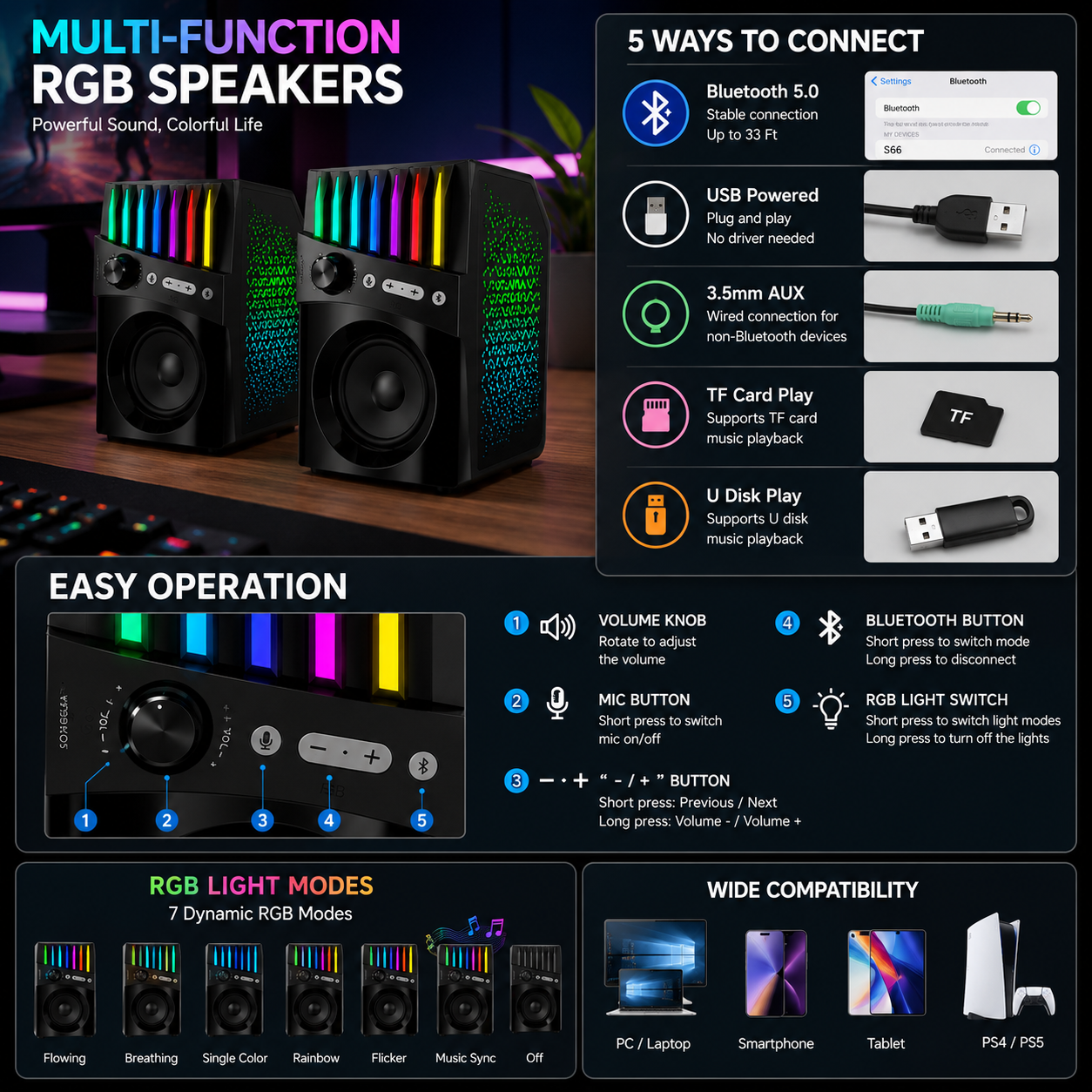
RGB Gaming Speakers
Gaming Soundbars
Desktop Speakers
With over 16 years of manufacturing experience, Shinedee helps global brands create gaming audio products with strong performance and market appeal.
🔎Read: Gaming Speakers Manufacturer for OEM, ODM and Private Label Brands
Frequently Asked Questions
What makes a gaming speaker sound better?
Driver quality, acoustic structure, DSP tuning, and amplifier design all influence sound performance.
Are RGB gaming speakers only about appearance?
No. Professional gaming speakers combine visual design with acoustic engineering.
Can manufacturers customize sound?
Yes. OEM manufacturers can adjust sound profiles according to brand requirements.
Is bigger speaker size always better?
Not necessarily. Good engineering can achieve strong performance in compact designs.
Why does DSP matter?
DSP allows manufacturers to optimize sound performance digitally.
Conclusion
Gaming speaker acoustic design is a combination of science, engineering, and user experience.
A successful gaming audio product must balance:
Sound quality
Product design
Gaming requirements
Manufacturing feasibility
For brands entering the gaming audio market, choosing a manufacturer with real acoustic engineering capability is essential.
Shinedee combines engineering expertise and manufacturing experience to help global partners create competitive gaming speaker products.
🔎Read more: