Gaming Speaker RGB Technology: How Manufacturers Design Smart Lighting Systems
Gaming Speaker RGB Technology: How Manufacturers Design Smart Lighting Systems
Introduction
RGB lighting has become one of the most recognizable features of modern gaming accessories.
From keyboards and mice to PC cases and gaming speakers, RGB has transformed from a simple decorative element into an important part of the gaming experience.
For gaming speaker brands, RGB technology creates opportunities to:
Improve product appearance
Build brand identity
Increase product differentiation
Create stronger emotional connections with users
However, professional RGB development requires much more than adding LED lights.
A high-quality RGB gaming speaker requires careful planning of:
LED placement
Light diffusion
Control systems
Firmware
Power management
Product structure
This guide explains how manufacturers develop RGB lighting systems for gaming speakers.
Why RGB Matters in Gaming Speakers
Gaming products compete not only through specifications but also through user experience.
RGB lighting helps create:
Immersive gaming environments
Personalized desktop setups
Premium product appearance
For many users, the gaming setup is an expression of personal style.
RGB speakers become part of that visual ecosystem.
RGB Lighting System Components
A gaming speaker RGB system usually includes several components.
1. LED Light Source
LEDs provide the actual illumination.
Manufacturers consider:
Brightness
Color accuracy
Energy consumption
Heat generation
The goal is to achieve strong visual impact while maintaining reliability.
2. Light Diffusion Structure
A common difference between basic and premium RGB products is light diffusion.
Poor diffusion creates:
Visible LED points
Uneven brightness
Low-quality appearance
Professional designs use:
Diffusion materials
Optical structures
Light guides
to create smoother illumination.
3. RGB Controller
The controller manages:
Color changes
Lighting patterns
Speed adjustment
User controls
It allows users to switch between different lighting effects.
4. Firmware Programming
Firmware controls RGB behavior.
Functions may include:
Startup animation
Lighting memory
Mode switching
Brightness control
Synchronization effects
Good firmware improves the user experience.
Common RGB Effects in Gaming Speakers
Static Color Mode
Users select one fixed color.
Popular for:
Minimalist setups
Professional desks
Brand matching
Breathing Effect
The light gradually increases and decreases.
Advantages:
Comfortable
Elegant
Less distracting
Rainbow Effect
Multiple colors transition continuously.
Popular for:
Gaming rooms
Streaming environments
Music Reactive Mode
Lighting responds to audio signals.
Creates:
Interactive experience
Party atmosphere
Strong visual engagement
Wave Lighting
Colors move across the speaker surface.
Especially effective for:
Gaming soundbars
Long RGB light strips
RGB Design Challenges
Creating attractive RGB lighting requires engineering.
Challenge 1: Heat Management
LED systems generate heat.
Engineers must consider:
Component placement
Power consumption
Thermal management
Challenge 2: Lighting Consistency
Multiple production units must maintain:
Same brightness
Same color accuracy
Same lighting behavior
This requires production testing.
Challenge 3: Structural Integration
RGB components must fit with:
Speaker drivers
PCB layout
Housing structure
Lighting design must not negatively affect acoustic performance.
RGB Customization Opportunities for Brands
OEM customers can customize:
Lighting Colors
Examples:
Brand blue
Gaming red
Premium white
Custom color combinations
Lighting Effects
Options include:
Exclusive animations
Brand startup effects
Custom sequences
Control Methods
Possible controls:
Physical buttons
Remote control
Software control
Automatic modes
RGB in Different Gaming Products
RGB 2.0 Gaming Speakers
Advantages:
Independent lighting on each speaker
Strong desktop visual impact
Traditional gaming appearance
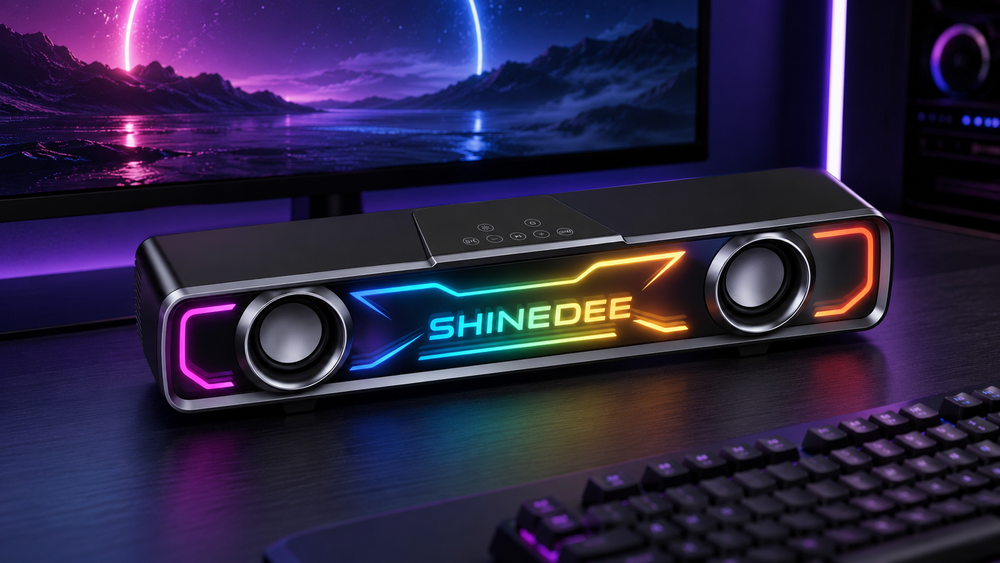
RGB Gaming Soundbars
Advantages:
Continuous lighting effect
Clean desktop design
Monitor-friendly appearance
Portable Gaming Speakers
Advantages:
Mobile RGB experience
Lifestyle positioning
RGB and Brand Differentiation
Many gaming products compete in crowded markets.
Customization helps brands avoid price competition.
Examples:
A standard product:
"RGB Gaming Speaker"
A differentiated product:
"Gaming Speaker with Brand-Specific RGB Experience"
The second creates stronger customer recognition.
🏭 Real Factory Insight
One of the most challenging parts of RGB production is maintaining consistency between every unit.
A prototype may look perfect, but mass production requires controlling:
LED position
Diffusion material
PCB control
Assembly accuracy
Small differences can create visible changes in lighting effects.
Professional factories therefore include RGB inspection during quality control, not only during product development.
How Shinedee Supports RGB Gaming Speaker Development
Shenzhen Shinedee Electronics specializes in RGB gaming audio products.
Our capabilities include:
RGB lighting system development
LED integration
Firmware customization
Industrial design
Acoustic engineering
PCB integration
Mass production
Gaming products include:
RGB Gaming Speakers
Gaming Soundbars
Desktop Speaker Systems
With over 15 years of manufacturing experience, Shinedee helps global gaming brands create products combining sound performance and visual innovation.
Frequently Asked Questions
Can RGB lighting effects be customized?
Yes. Brands can customize colors, animations, brightness, and control methods.
Does RGB affect speaker performance?
A well-designed RGB system does not negatively affect sound quality.
Can RGB synchronize with music?
Yes. Many gaming speakers support music-reactive lighting effects.
Why do premium RGB products look smoother?
Because they use better diffusion design, structural integration, and quality control.
Can brands create exclusive RGB designs?
Yes. OEM development allows unique lighting experiences.
Conclusion
RGB technology has become an important part of modern gaming speaker design.
A successful RGB system requires the combination of:
Hardware engineering
Lighting design
Firmware development
Production control
For gaming brands, customized RGB technology provides a powerful way to create differentiated products and stronger market positioning.
Shinedee helps global partners develop RGB gaming speakers with professional engineering, manufacturing capability, and OEM/ODM flexibility.
🔎Read more: Gaming Speakers Manufacturer for OEM, ODM and Private Label Brands